St Nicholas Feast Day: The Wonderworker and His Icon

Feasts of the Church · 6 December
On the St Nicholas feast day, 6 December, the Orthodox Church honours a fourth-century bishop whose kindness still travels the world: St Nicholas the Wonderworker, Archbishop of Myra in Lycia. Sailors call on him in storms, children hear his stories, and across Greece every Nikos and Nikoleta celebrates a name day.
In shortSt Nicholas was a bishop on the south coast of Asia Minor, remembered for secret charity, courage for the innocent and help at sea. His relics rest in Bari, and his icon is among the best loved in every Orthodox home.
At a glance
- Feast day
- 6 December
- Greek name
- Ἅγιος Νικόλαος ὁ Θαυματουργός (Agios Nikolaos o Thavmatourgos)
- Who he was
- Archbishop of Myra in Lycia, on the south coast of today’s Turkey
- When he lived
- Born at Patara; fell asleep in Myra around the mid-fourth century
- Patron of
- Sailors and seafarers, the Hellenic Navy, the poor and children
- Relics
- Basilica of San Nicola, Bari, Italy, since 1087
- Fasting
- The feast falls within the Nativity Fast before Christmas
Who was St Nicholas the Wonderworker?
Nicholas was born at Patara, a harbour town of Lycia on the south coast of Asia Minor. His parents were devout and well off, and when they died he gave his inheritance away to the poor, the orphans and the widows.
He became Archbishop of Myra, a nearby city that is today the town of Demre in Turkey. According to tradition, he was thrown into prison for his faith during the persecution of Diocletian, and was set free when Constantine came to power. He shepherded his flock into old age and fell asleep in the Lord on 6 December, around the middle of the fourth century.
What stories does the Church tell of St Nicholas?
Most of his story was written down centuries after his death, in the Lives of the saints, so it reaches us through the Church’s tradition. Three stories have been loved for more than a thousand years.
Three dowries, given in secret
A poor father in Patara could not find dowries for his three daughters and was about to give them up to a life of shame. Nicholas came by night and threw a bag of gold through the window, then did the same for the other daughters, so that each could marry honourably. He gave in secret, wanting no one to know.
Three innocent men
In Myra a bribed governor sentenced three innocent men to death. Nicholas reached the place of execution just in time and took hold of the executioner’s sword, and the governor repented. The tradition adds that he later appeared in a dream to the emperor Constantine to save three falsely accused officers.
Help at sea
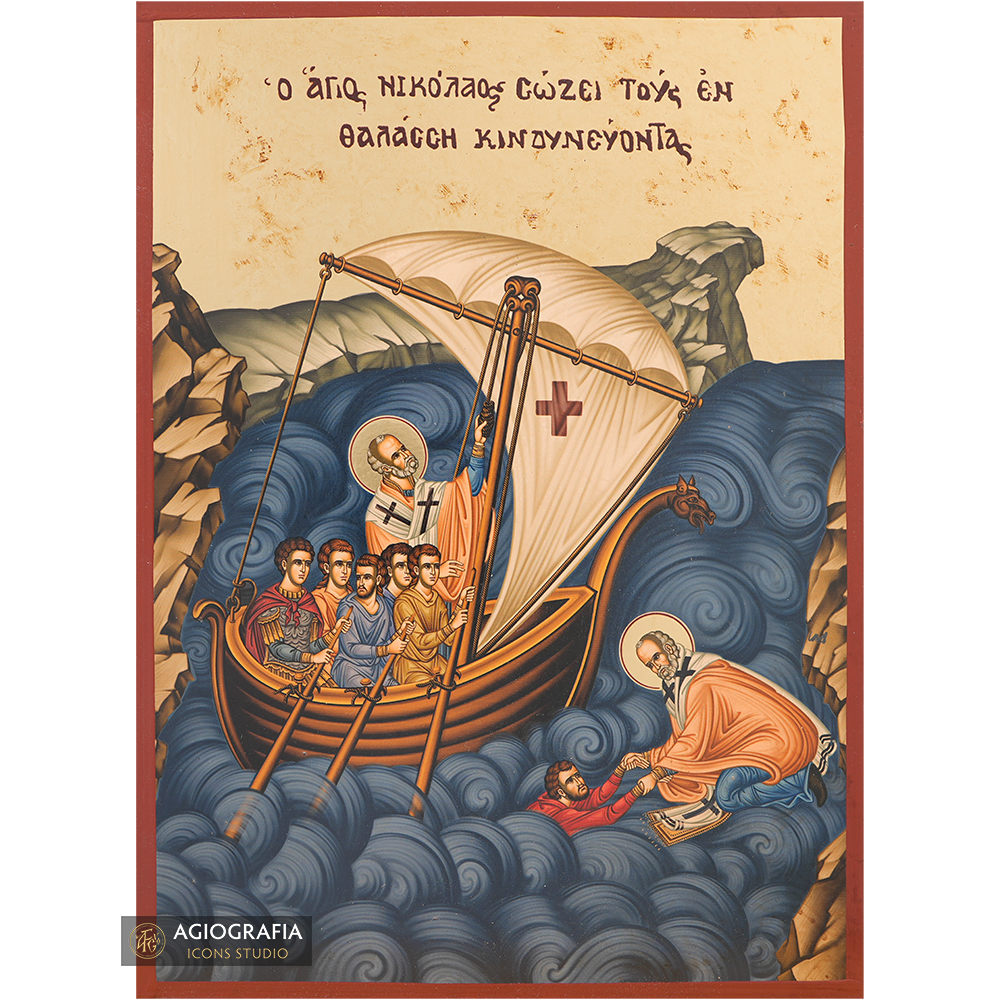
On a voyage to the Holy Land, his Life says, a storm rose and the sailors begged him to pray. The sea grew calm, and a sailor who had fallen from the mast was restored to health. This is why seafarers have called on him ever since.
According to tradition, he was among the Fathers of the First Ecumenical Council at Nicaea in 325, standing firm for the true faith against Arius. Accounts of the Council written at the time do not mention him, so this, too, comes to us through tradition rather than recorded history.
“When you give to the poor, do not let your left hand know what your right hand is doing.”
How did St Nicholas come from Myra to Bari?
For centuries pilgrims came to his tomb in Myra, where his relics gave off fragrant myrrh; in Greek he is called Myrovlytis, the myrrh-streaming. In 1087 sailors from Bari carried most of the relics to their city in southern Italy, where they rest today in the Basilica of San Nicola. The Church also remembers this transfer of his relics with a feast in May.
In Bari a small amount of clear liquid is still drawn from the tomb each year. The faithful call it the “manna” of St Nicholas and receive it with reverence.
- Late 3rd century: Nicholas is born at Patara, a harbour town in Lycia.
- Early 4th century: By tradition, imprisoned for Christ under Diocletian, freed under Constantine.
- Mid-4th century: Falls asleep in the Lord at Myra on 6 December.
- 9th century: Byzantine Lives of the saint record the three dowries.
- 1087: Sailors from Bari carry most of his relics to Italy.
How do you read a Saint Nicholas icon?
His icon is one of the easiest to recognise: a bishop with a high forehead, a short white beard and a kind gaze that looks straight at you.

- The inscription. Red letters beside the halo read Ὁ Ἅγιος Νικόλαος, “Saint Nicholas”, so we know whom we greet.
- The face. The broad, high forehead and white beard speak of wisdom and long years of prayer; the eyes meet ours with gentleness.
- The phelonion. The deep red outer vestment is the phelonion, the robe bishops of his age wore when they served at the altar.
- The omophorion. The white band with large black crosses marks a bishop. It recalls the lost sheep the Good Shepherd carries on his shoulders.
- The blessing hand. His right hand is raised in blessing over all who stand before him.
- The Gospel book. He holds a richly decorated red Gospel: a bishop is first a teacher of the faith, and his hymn calls him a “rule of faith”.
How is the St Nicholas feast day kept?
Churches dedicated to him keep their feast with festal Vespers on the eve and the Divine Liturgy in the morning.
In Greece
St Nicholas is the patron of the Hellenic Navy and the Coast Guard, and 6 December is their holiday. Navy and merchant ships carry his icon, and harbour towns such as Nafplio keep a church of St Nicholas right by the water.
It is also a great name day. Everyone called Nikolaos, Nikos, Nikoleta or Nikoletta celebrates on this day.
In many countries children find a small gift on St Nicholas’ day. In Greece the gift-giver is traditionally St Basil, who comes at New Year, but the spirit is the same: giving in the name of a saint.
The hymn of the feast
His apolytikion, the short hymn of his feast, is sung in Orthodox churches on his day. Here it is in our own English translation.
The truth of your deeds revealed you to your flock
as a rule of faith, an image of meekness
and a teacher of self-control.
So by humility you gained the heights,
and by poverty, riches.
Father and hierarch Nicholas,
intercede with Christ our God that our souls be saved.
Read the hymn in Greek
Κανόνα πίστεως καὶ εἰκόνα πραότητος, ἐγκρατείας διδάσκαλον, ἀνέδειξέ σε τῇ ποίμνῃ σου, ἡ τῶν πραγμάτων ἀλήθεια· διὰ τοῦτο ἐκτήσω τῇ ταπεινώσει τὰ ὑψηλά, τῇ πτωχείᾳ τὰ πλούσια, Πάτερ ἱεράρχα Νικόλαε· πρέσβευε Χριστῷ τῷ Θεῷ, σωθῆναι τὰς ψυχὰς ἡμῶν.
Add the feast to your calendar
Before the icon of St Nicholas
Holy Father Nicholas, you gave in secret and stood up for the innocent. Teach me to give without being seen and to speak up for those who have no one. Watch over all who travel by sea and land, and pray to Christ our God for us.
Amen
A personal prayer written for this page, echoing the close of his hymn.
Tip: print this page and the prayer card keeps to one page, clean and simple.
Questions people ask
When is St Nicholas feast day?
The Orthodox Church keeps the feast of St Nicholas on 6 December each year, the day he fell asleep in the Lord at Myra. Churches named after him celebrate their feast with Vespers on the eve and the Divine Liturgy.
Is St Nicholas the same as Santa Claus?
Santa Claus grew out of him. Dutch settlers took “Sinterklaas”, their name for St Nicholas, to America, where, blended with other folk tales, the figure became the Santa Claus of today. The real Nicholas was a fourth-century bishop whose secret generosity still inspires giving.
Where are the relics of St Nicholas?
Most of his relics rest in the Basilica of San Nicola in Bari, Italy. Sailors from Bari brought them from Myra in 1087. Some remaining fragments were later taken to the Lido of Venice.
Why is St Nicholas the patron saint of sailors?
Because of the sea miracles told in his Life: by tradition he calmed a storm on a voyage to the Holy Land and saved a sailor who fell from the mast. Greek navy and merchant ships still carry his icon.
Why is he called the Wonderworker?
Because of the many miracles the Church remembers, in his lifetime and after it. In Greek he is Θαυματουργός, “wonderworker”, and also Μυροβλύτης, “myrrh-streaming”, because fragrant myrrh flowed from his relics.
A bag of gold through a window, a sword stopped in mid-air, a calm sea. When you light your lamp on 6 December, ask the old bishop of Myra to teach you to give the way he did: quietly, and with joy.